By Naveed Qazi
Over the past few decades, a growing scholarship has emerged from Kashmir valley, which has established a profound transformation of the valley’s agrarian landscape. Their research work suggests that agricultural land is steadily shrinking, farming is becoming less attractive as a livelihood, and the rural society is undergoing a process of de-agrarianisation. There have been several contemporary studies done which lay out policy, their implications, as well as scientific reasons behind agricultural decline, leading to varying perspectives.
One of the earliest scientific examinations of this phenomenon came from agricultural economists, Dr. M.H. Wani, Sajad Hassan Baba, and Shahid Yousuf of SKUAST-Kashmir in their influential 2009 study. They came to some conclusions such as huge pressure of increasing population on land and other resources of the state leading to agricultural production decline. They also perceived a lack of effective policy, unlike in the early 1980s, where there were certain land reclamation measures. Their study also revealed as there are mostly small and marginal farmers in Kashmir valley, it hinders high scale agricultural development in the region. They also suggested crop diversification in different agro-climatic zones with a view to maximise returns for the farmer. The scholars further suggested low gestation irrigation projects to expand irrigation facilities. The 2009 study also petitions for a new land reform policy and regulations. Moreover, the existing farming system of the research also leans towards diversification towards short-duration vegetable crops. As per findings, the multiple cropping of vegetable crops may help generate higher revenue and uplift the rural community.
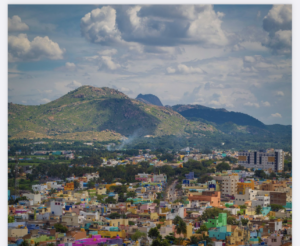
Climate Change and the Shift to Commercial Horticulture in the Valley
An article published in September 2025 in Current Agriculture Research Journal, titled ‘Dynamics of Cropping Pattern and its Drivers and Impacts: A Theil–Sen Estimator Approach in Anantnag District, Kashmir Valley, India’ postulated in a survey through respondents that between 2001 and 2020, the shift to climate change, water scarcity, economic motives towards commercial horticulture through apple monoculture and export oriented farming were main reasons for decline in paddies, especially in areas on Anantnag. Authors of this paper namely Dr. Mohammad Shafi Bhat, Dr. Javeed Ahmad Rather and Azhar u Din underscore the urgent need for sustainable land-use planning to ensure economic resilience, food sustainability, environmental protection, and public health in the region.
There are other scientific perceptions which have come into the fore as well. Dr Mohd Anzar Warr, holding guest faculty at University of Kashmir argued in ‘Issues and Challenges of Depeasantisation in Contemporary Kashmir’ in Journal of Asia Pacific Studies (2021) that urbanisation, poverty, decreasing productivity, government acquisition of land from the peasants for developmental projects, lack of marketing facilities, lack of irrigation facilities and low or no subsidy provided by the government to the marginal, small peasants, as well as high inputs and low outputs have significantly contributed to agricultural distress in Kashmir.
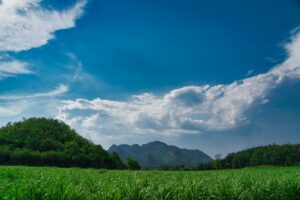 The Role of Urbanisation and Infrastructure in Agricultural Distres
In recent research done by Ishrat F Bhat and her peers in 2026, published in Water Science, Springer Nature Link, titled ‘Six Decades of Land Use and Land Cover Change in Jammu and Kashmir: Socio-Economic Drivers and Implications for Water Resources,’ also revealed some notable dimensions. It shows that transport connectivity, demographic expansion, literacy gains, and income growth towards urbanisation have also contributed towards low agricultural output. The research also suggests that less rainfall may need extensive irrigation, requiring more acreage for irrigation systems. They have illustrated their conclusions through comprehensive empirical enquiries.
Also, the paper postulates that changes in temperature or rainfall in the early 1960s might have had an influence on agricultural output, farm profitability, regional productivity costs, and the number of people at risk of famine in Kashmir Valley. The findings endorse the idea that global climate change has been established in the region, pointing towards sustainable land governance and water resource management as well. The author has given integrated transport–land-use planning, and rangeland governance reform as policy recommendations.
Food Security at Risk: The Long-Term Impact of Land Conversion
Hence, through the perception of local scholars and collective analysis, the agrarian distress in contemporary Kashmir implicitly raises concerns that continuous farmland conversion may increase valley’s dependence on imports from outside the region. It may give long term challenges to the region.
Under the ambit of economics, shift of agricultural commercialisation towards horticulture industry from primary agricultural production can even sometimes function like an extractive system through interconnected processes. It is because farmers become dependent on weak internal inputs, sometimes external inputs, market fluctuations, and state-backed production models. In regions such as Kashmir, this can also make rural livelihoods little or more vulnerable despite apparent increases in productivity, raising yet another dimension.
The analysis does point towards conclusions that agrarian change in Kashmir is a multidimensional process. There seems to be a contradiction between economic rationality and food security in the region. The central contribution lies in demonstrating that Kashmir’s agricultural transformation cannot be explained through a single causal factor. Rather, it emerges from the interaction of forces, policies, and changes, putting food sovereignty in Kashmir valley in a volatile condition.
 Naveed Qazi is a Contributing Editor at Science Matters and a published author. Hailing from Srinagar, Kashmir, with a postgraduate degree in International Business from the University of Hertfordshire, United Kingdom, he writes on science, technology, business, global affairs, and has contributed to all leading English-language newspapers in Kashmir. His professional experience spans hospital marketing, banking, construction operations and IT content development across India and the United Arab Emirates.