High-Altitude Warming in Jammu & Kashmir Raises Fresh Climate Concerns
By Chandrani Sinha
A landmark study has revealed a troubling shift in the climate of northern India, finding that high-altitude regions of Jammu and Kashmir have warmed by nearly 1 degrees Celsius over the last 20 years.
The research, published in the journal Scientific Reports https://www.nature.com/articles/s41598-026-61302-2. , warns that the peaks of the Himalayas are warming significantly faster than lower-elevation plains, threatening the stability of glaciers and water security for millions.
The study, conducted by researchers from the Centre for Ocean, River, Atmosphere and Land Sciences (CORAL) at the Indian Institute of Technology (IIT) Kharagpur, analysed 44 years of data spanning from 1980 to 2024. Their findings highlight a phenomenon known as “elevation-dependent warming,” where the pace of temperature increase accelerates as altitude rises.
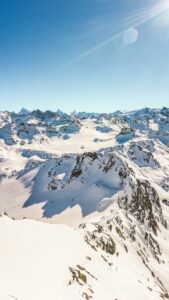 Himalayan Mountain Hotspots Witness Faster Temperature Rise
While lower-elevation areas like Jammu showed weak or statistically insignificant warming over the long term, high-mountain stations have become thermal hotspots. Popular destinations such as Bhaderwah, Pahalgam, and Gulmarg are experiencing the brunt of this shift. According to the data, annual mean temperatures at some mid-elevation stations have climbed by up to 0.3°C per decade.
The most dramatic changes, however, are occurring when the sun goes down. The researchers found that night-time minimum temperatures are rising much faster than daytime maximums, particularly during the pre-monsoon season. In these periods, night-time temperatures have surged by as much as 0.6°C per decade.
“Warmer nights reduce natural cooling, accelerate snow and ice melt, and alter mountain hydrology,” explained lead author GS Gopikrishnan. This lack of nocturnal recovery prevents the “natural water towers” of the mountains from maintaining their frozen reserves.
Why the Himalayas Are Warming Faster: Snow Loss and Atmospheric Moisture
The IIT Kharagpur team, led by Prof. Jayanarayanan Kuttippurath alongside GS Gopikrishnan and VM Pranav Chandran, identified two primary drivers for this rapid warming.
Snow-Albedo Feedback: In winter, reduced snow cover exposes darker ground, which absorbs more solar radiation instead of reflecting it, leading to further warming.
Atmospheric Moisture: Increased moisture and enhanced longwave radiation are trapping heat at night, driving the year-round rise in minimum temperatures.
“The Himalaya is among the most climate-sensitive regions on Earth, and our results show that warming is not uniform across elevations,” said Prof. Kuttippurath. He emphasized that the interaction between altitude and radiation creates distinct patterns that are essential to understand for any future disaster-risk reduction strategies.
 Glacier Retreat, Water Security and Flash Flood Risks Set to Increase
The implications of these findings extend far beyond the mountain peaks. The researchers emphasize that continued warming will likely accelerate glacier retreat and reduce seasonal snow storage. This could lead to erratic river flows, affecting agriculture, hydropower, and drinking water for the entire region.
Furthermore, the study warns of an increased likelihood of climate-related hazards, such as flash floods and landslides, as the delicate mountain ecosystem becomes increasingly unstable.
The scientists are now calling for a significant strengthening of mountain climate monitoring. They argue that sustained observations and targeted adaptation policies are the only way to safeguard one of the world’s most vulnerable ecosystems and the millions of livelihoods that depend on its water resources.