By Janani M
What if the next breakthrough in fighting climate change was not a new environmental law, a massive forest plantation or a global protest, but something as ordinary as a refrigerator, a solar panel or a satellite orbiting thousands of kilometres above Earth?
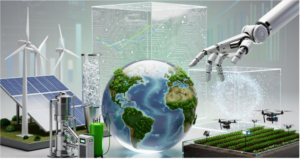
At the 31st United Nations Climate Change Conference (COP31), taking place in Antalya, Türkiye, from November 9 to 20, 2026, technology offered a different perspective on climate action. Beyond discussions of emission targets and international commitments, the conference’s technology exhibitions presented an intriguing possibility: what if the machines, materials, and digital systems shaping modern life could also help protect the planet?
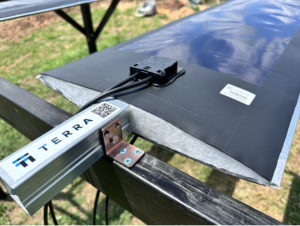
One particularly interesting innovation was a solar panel that challenges the traditional idea of where solar energy can be generated. At the Japan Pavilion,
TERRA and its partners showcased film-type perovskite photovoltaic technology. Unlike conventional rigid solar panels, these lightweight and flexible modules can be deployed on agricultural land, lightweight roofs and carports. Their agricultural solar-sharing approach aims to generate electricity while allowing crops to grow on the same land. The exhibitors also report that their paddy-field application has reduced methane emissions by approximately 50%. With commercial sales planned for 2027, this technology raises an exciting question: could tomorrow’s farms become electricity-generating climate solutions?
But what about the pollution that cannot be seen with the naked eye?
This is where satellites and artificial intelligence enter the picture. ArkEdge Space is presenting an integrated climate solution combining satellites, the Internet of Things (IoT) and AI. The objective is to use connected technologies to improve environmental observation and climate-related decision-making. Another exhibition involving Mitsubishi Electric, Satellite Data Services and MUFG Bank demonstrates how satellite-based greenhouse gas data can support decarbonisation and the energy transition. The GOSAT 3D Visualizer also helps users understand the distribution of greenhouse gas concentrations through satellite observations. Instead of depending entirely on measurements collected on the ground, these technologies offer a wider view of the atmosphere.
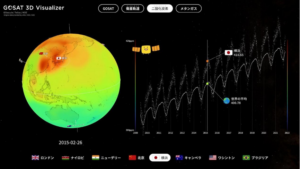
Satellite-based greenhouse gas observation and visualisation supporting climate monitoring and decarbonisation.
The next climate challenge is surprisingly close to our everyday lives: the energy consumed by artificial intelligence itself. Every AI-generated image, complex calculation and digital service depends on computing infrastructure that requires electricity and cooling. Nidec’s virtual Japan Pavilion exhibition addresses this challenge through water-cooling technology for AI data centres. Its showcase also includes battery energy storage systems, variable-speed compressors and magnet-free motors for electric mobility. These technologies explore how industrial equipment and digital infrastructure can become more energy-efficient. The irony is fascinating: as AI becomes a tool for protecting the climate, the technology powering AI must also become more sustainable.

Climate innovation is also entering the kitchen. At the Koç Holding Pavilion, Beko is showcasing connected household appliances designed to reduce energy and water consumption. Its Diamond Series dishwasher uses heat-pump technology, while its AI-supported refrigerator learns from usage patterns and environmental conditions to optimise cooling. The HomeWhiz platform allows users to monitor appliance energy and water consumption, and its FlexiStart feature is designed to schedule appliance operation during lower-cost electricity periods. The exhibition also includes bifacial solar panels that generate electricity from both sides. These developments demonstrate how climate action can move beyond industrial facilities and become part of everyday household decisions.

“People shouldn’t have to become energy experts to use less energy,” Can Dinçer, CEO of Beko, in the company’s COP31 announcement.
Meanwhile, the fight against climate change is not limited to electricity generation. Waste, construction and transportation also demand attention. JFE Engineering is presenting waste-to-chemical technology that uses gasification to support chemical recycling and waste-to-energy processes. LIXIL is demonstrating the potential of circulating plastic and aluminium materials rather than treating them as disposable resources. Takenaka’s Forest Grand Cycle promotes timber innovation for urban wooden architecture and a circular economy. These approaches explore how the materials used to build cities and manufacture products can be managed more sustainably.

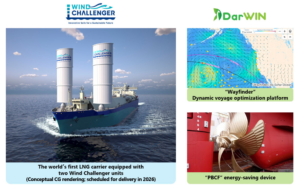
Even global shipping is being reconsidered. Mitsui O.S.K. Lines is showcasing maritime efficiency technologies that combine wind, operational data and AI. The concept brings together traditional wind power and modern digital intelligence to improve vessel operations and reduce fuel consumption.
Yet, an important question remains: can these innovations reach beyond exhibition halls and become solutions accessible to the wider world? Flexible solar technology must become affordable, AI infrastructure must reduce its own environmental footprint, and climate-monitoring systems must translate information into timely action. Their success will depend not only on invention but also on implementation, investment and international cooperation.
COP31’s technology showcases offer a glimpse of a future in which climate protection is integrated into agriculture, transport, homes, industries and even the digital world. Perhaps the most exciting discovery is not one particular invention, but the possibility that ordinary technology can be redesigned to perform an extraordinary task.
Janani M is an undergraduate Computer Science and Engineering student with a keen interest in science, technology, research and scientific communication. She enjoys exploring emerging discoveries and translating complex scientific developments into accessible, engaging stories for a wider audience. Her interests span artificial intelligence, computational research and emerging scientific innovations.