For much of the past decade, artificial intelligence has been marketed as a technological breakthrough that would make organisations more efficient, reduce labour costs and unlock extraordinary productivity gains. The narrative was simple and compelling. Machines would assume routine tasks, businesses would operate with fewer employees and economic output would increase. Investors embraced the vision, executives repeated it and consultants built entire strategies around it, writes Naveed Qazi.
Yet as artificial intelligence moves from experimentation to large-scale deployment, a more complicated picture is emerging. The systems expected to reduce costs are themselves becoming major cost centres. Across the technology industry, companies are discovering that advanced AI requires enormous expenditures on computing infrastructure, specialised hardware, electricity and maintenance. The economics of automation are proving less straightforward than many early advocates suggested.
The Promise of AI-Driven Efficiency Faces Economic Reality
One reason is that artificial intelligence is often discussed as though it were a purely digital phenomenon. In reality, every interaction with a large language model depends upon an extensive physical infrastructure. Massive data centres, high-performance graphics processors, cooling systems, networking equipment and power supplies all contribute to the operation of modern AI services. Behind every seemingly effortless response generated by a chatbot lies a complex and expensive industrial process.
The scale of these costs is beginning to attract attention within the industry itself. Writing in Forbes, technology analyst Tim Bajarin highlighted a growing shift in corporate spending away from traditional labour expenses and towards artificial intelligence computing infrastructure. Bajarin cited remarks by Nvidia executive Bryan Catanzaro, who observed that in some contexts the cost of computation had surpassed personnel costs. Such observations are noteworthy because they come from individuals directly involved in developing and deploying advanced AI systems rather than from external critics.
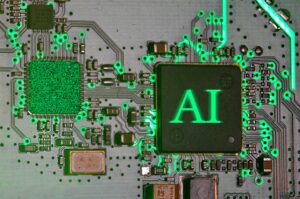 Data Centres, GPUs and Energy Costs: The Physical Side of AI
Concerns are not limited to infrastructure spending. Reporting by Business Insider examined the emergence of what some technology workers call “tokenmaxxing,” a culture in which employees are encouraged to maximise their use of AI systems. The publication noted concerns that usage statistics can become proxies for productivity, even when the relationship between AI consumption and measurable business outcomes remains unclear. When organisations reward activity rather than results, efficiency can become difficult to distinguish from waste.
The financial implications of this trend are becoming increasingly visible. Drawing on reporting from The Information, Tim Bajarin noted that Uber rapidly exhausted its annual artificial intelligence budget after expanding the use of coding assistants and related technologies. The episode raised broader questions about whether rising computational expenses are generating proportionate improvements in products, services or profitability. Increasing the volume of AI-generated output does not necessarily translate into greater efficiency.
The Challenge of Measuring Return on Investment in AI
This reality complicates one of the most common assumptions surrounding automation. Businesses have frequently been told that artificial intelligence will reduce labour requirements and streamline operations. Yet many AI deployments continue to require substantial investment in software subscriptions, computing resources and human oversight. As Neil C. Hughes noted in Cybernews, companies are increasingly confronting questions about whether the benefits of AI adoption justify its growing costs.
History offers many examples of technologies that inspired grand expectations before their economic impact became clear. Railways, electricity, telecommunications and the internet all experienced periods of intense enthusiasm accompanied by speculative investment. In many cases, the long-term benefits eventually justified the optimism. The question confronting artificial intelligence today is not whether it is impressive but whether it can consistently deliver value commensurate with the resources being invested in it.
This distinction is important. Technological innovation and economic productivity are not synonymous. A system may be capable of performing remarkable tasks while still failing to provide a cost-effective solution. In Capitalism, Socialism and Democracy, economist Joseph Schumpeter described capitalism as a process of creative destruction in which new innovations replace older methods and drive economic progress. Yet the process ultimately depends upon productivity gains. If costs rise faster than benefits, disruption alone cannot be regarded as progress.

Why Automation Is Not Always Cheaper Than Human Labour
The widespread assumption that artificial intelligence will inevitably eliminate large numbers of jobs deserves similar scrutiny. Public debate often treats workforce displacement as an unavoidable consequence of technological advancement. However, economic feasibility remains a crucial consideration. Research by Neil Thompson and his colleagues at the Massachusetts Institute of Technology found that many automation projects are not economically viable when compared with human labour. The existence of a technological capability does not automatically mean that deploying it makes financial sense.
Environmental considerations further complicate the picture. Expanding artificial intelligence infrastructure requires increasing amounts of electricity, water and construction. Data centres have become strategic assets precisely because advanced computation consumes substantial resources. Although AI services are frequently described in abstract digital terms, their operation depends upon physical systems with tangible environmental costs.
Human Oversight Remains Essential in Many AI Applications
The social implications are equally significant. Many artificial intelligence applications continue to require human involvement to identify errors, verify outputs and correct inaccuracies. Rather than eliminating people from the process entirely, many organisations are discovering that effective AI deployment often combines automation with human expertise.
Questions about who benefits from this transformation also remain unresolved. In The Age of Surveillance Capitalism, Shoshana Zuboff argued that digital technologies frequently evolve into systems that extract value from data, attention and behaviour. Her analysis remains relevant in an era where a relatively small number of companies control much of the infrastructure, capital and computational capacity required to develop advanced artificial intelligence systems.
Investors, meanwhile, are becoming more demanding. During the early stages of the AI boom, markets often rewarded companies simply for demonstrating involvement in the technology. Increasingly, however, shareholders are asking harder questions. They want evidence that AI investments are producing measurable returns, whether through lower costs, increased revenues or genuine improvements in productivity. Enthusiasm alone is no longer sufficient.
The Future of AI Depends on Economic Viability, Not Just Innovation
None of this means that artificial intelligence lacks transformative potential. The technology continues to evolve rapidly and may yet deliver many of the efficiencies its advocates predicted. However, the experience of recent years suggests that technological capability and economic viability are not always aligned. Businesses cannot assume that deploying artificial intelligence automatically leads to lower costs or greater productivity.
The lesson emerging from the current phase of the AI revolution is straightforward. The long-term success of artificial intelligence will depend not merely on technical sophistication but on its ability to create value that exceeds its costs. Until that relationship is demonstrated consistently and at scale, questions about the economics of AI will remain central to the debate surrounding its future.
 Naveed Qazi is a writer and commentator from Srinagar, Kashmir, with a postgraduate degree in International Business from the University of Hertfordshire, United Kingdom. He writes on technology, economics, business, and global affairs, and has contributed to leading English-language newspapers in Kashmir. His professional experience spans marketing, banking, and business development across India and the United Arab Emirates.