AI image generators frequently define the “default human” as inherently able-bodied, relegating disability to a “glaring lacuna” or a specified exception. This systemic erasure solidifies digital exclusion, requiring a structural shift that recognises diverse bodies as a fundamental norm of our visual future, writes Aarushi Gambhir.
Search ‘a person walking in a park’ into any AI image generator, and the result you will rarely get is an image of a wheelchair user, someone with a prosthetic limb, or a person with a visible impairment. This lacuna is glaring because in a world discussing ‘AI for All’, the system fails to acknowledge disabled people unless explicitly asked to. This is the default construction of artificial intelligence, where human imagery is inherently able-bodied and aesthetically ideal. Disability only enters the frame as an exception, rather than a norm of everyday life.
The Root of Bias: How Training Data Shapes Reality
It is a mistake to view this as a technical limitation; it is a systemic issue of representation. Training data for AI image generators is scraped from the internet, stock photo libraries, and social media platforms where users curate realities that privilege certain bodies. These biases are amplified and reproduced at scale by algorithms.
Currently, disability representation in these datasets falls into two extremes:
- Curated Resilience: Market-ready, edited moments of “inspiring” content that commercialise disability.
- Medical Tragedy: Images of hospital beds and clinical environments that frame disability as a “correction” or “tragedy”.
The everyday reality of living with a disability—and its intersection with class, caste, gender, and geography—seldom finds a place in this spectrum. As cultural theorist Stuart Hall suggests, representation constructs reality; what remains unseen is difficult to imagine.
Real-World Consequences of the ‘Default Human’
When the able-bodied person is the default, anything else is seen as a deviation requiring explanation. In India, this erasure ignores the presence of disabled bodies in schools, workplaces, and public transport. These generated images are often aspirational and detached from lived realities.
This exclusion is not just abstract; it has tangible dangers:
- Hiring Tools: AI may duplicate biases when screening candidates.
- Education Tech: Classrooms may be visualised without accessibility in mind.
- Infrastructure: What is not imagined in AI will not be accounted for in the design of the physical world.
Technological bias does more than mirror society; it solidifies and naturalises exclusion.
 Visibility Without Voice: The Problem of Authorship
While AI can generate disabled bodies if prompted, this inclusion remains superficial. There is a glaring paradox: AI can produce infinite images of disabled people, yet disabled creators remain systematically underrepresented in the systems producing these images.
As emphasized by Paulo Freire, true representation emerges from participation. When disabled people are excluded from the process, they are reduced to objects of knowledge rather than subjects of their own experience. AI risks reinforcing this power imbalance by speaking about disability rather than from within it.
Beyond the Technical Fix: A Roadmap for Inclusive AI
Addressing misrepresentation requires intervention across all levels of society:
- State Intervention: Mandating inclusive datasets, transparent training, and diversity audits.
- Tech Collaboration: Giants must work with civil society to build counter-narratives.
- Empowering Creators: Artists and creators with disabilities must create visuals aligned with lived experience.
- Collective Digital Practice: Everyday users must recognize that what they upload, tag, and search affects how algorithms learn.
As India positions itself as a leader in “AI for All,” the cultural and political repercussions of these images cannot be ignored. The challenge is not to retrofit disability into existing systems, but to rethink the stereotypes that define the “default” human. The future of AI is written in images, and the ultimate question is whether AI will ever be able to imagine a world where disability already exists.
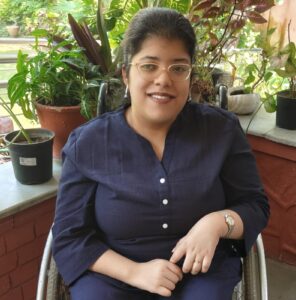 Aarushi Gambhir is the founder of Enable Education, a PhD Scholar, Disability Inclusion Consultant, Published Author and TedX Speaker. She has worked extensively in disability inclusion, employment and education for people with disabilities. Her work is rooted in lived experience and cross sectoral expertise developed from working across organisations on intersectional issues. She has worked with government Think Tanks, International Organisations and DEI focused corporate firms.