By Naveed Qazi
In our world, more than half of the population now lives in cities, and the United Nations projects that this figure will reach about 68 per cent by 2050. The question is no longer whether cities should become sustainable, but how sustainability can be achieved across rapidly expanding urban areas. The answer lies not only in new technologies and smarter planning but also in ideas that are nearly two thousand years old and remain remarkably relevant.
Global Cities Leading the Way in Sustainable Urban Development
Cities such as Copenhagen, Singapore, Curitiba, Stockholm, and Freiburg demonstrate that economic growth, environmental protection, and a high quality of life can coexist, although rising living costs remain an ongoing challenge. Copenhagen’s extensive cycle-track network, district heating system, and CopenHill waste-to-energy facility integrate sustainable mobility, clean energy, and public recreation.
Singapore’s Supertree Grove, vertical greening, and NEWater programme illustrate how dense cities can strengthen environmental resilience through innovative resource management. Curitiba’s pioneering Bus Rapid Transit system, integrated with land-use planning since the 1970s, became a global benchmark for efficient public transport. Stockholm has restored polluted waterways, expanded green corridors, and introduced congestion pricing, while Freiburg’s Vauban district exemplifies low-energy urban design, solar energy, and sustainable architecture.
Together, these cities embody the vision of United Nations Sustainable Development Goal (SDG) 11, which calls for cities that are inclusive, safe, resilient, and sustainable. For Indian cities, particularly Delhi, Mumbai, Bengaluru, Chennai, and Pune, they provide valuable models for future urban development.
Why Sustainability and Economic Growth Go Hand in Hand
These examples reinforce what sustainability scholars Peter Newman, Jeffrey Kenworthy, Timothy Beatley, and David Satterthwaite have long argued: environmental responsibility and economic development can reinforce rather than undermine one another. Efficient public transport reduces congestion and fuel consumption, while as energy-efficient buildings lower household costs, cleaner air improves public health, and accessible green spaces enhance physical and mental well-being.
Sustainable planning also strengthens resilience to floods, heatwaves, water scarcity, and other climate-related risks while making cities more attractive for investment and innovation. Consequently, successful sustainable cities advance not only SDG 11 but also wider global goals relating to climate action, clean energy, public health, responsible consumption, and reducing inequalities.
From Vitruvius to Green Urbanism: Timeless Planning Principles
The intellectual foundations of sustainable urbanism can be traced to the Roman architect Vitruvius, who argued in De Architectura that successful civic design should satisfy three principles: firmitas (strength), utilitas (function), and venustas (beauty). Contemporary frameworks such as J. Owen Lewis’s A Green Vitruvius reinterpret this classical triad as climate-resilient infrastructure, efficient and inclusive urban design, and attractive, liveable public spaces, demonstrating that resilience, functionality, and beauty are mutually reinforcing rather than competing objectives.
Although these ideas are ancient, sustainable urbanism emerged as an organised international movement only in the late twentieth century. Following the 1987 Brundtland Report and the 1992 Earth Summit in Rio de Janeiro, sustainable development evolved from isolated planning experiments into a globally recognised policy framework linking environmental stewardship, economic development, and social inclusion.
How Great Urban Thinkers Shaped Modern Cities
Nearly two millennia after Vitruvius, Renaissance architects Leon Battista Alberti and Andrea Palladio revived and refined his principles to meet the needs of expanding commercial city-states. Alberti regarded architecture as a means of promoting civic order, public welfare, and political stability, while Palladio’s emphasis on proportion, symmetry, and functional elegance shaped public buildings throughout Europe. During the nineteenth and twentieth centuries, Ildefons Cerda and Le Corbusier adapted this Vitruvian tradition to address industrialisation. Cerda’s expansion plan for Barcelona tackled overcrowding, sanitation, ventilation, natural light, and transport through a rational street grid, whereas Le Corbusier’s Radiant City proposed high-density housing within generous green spaces, functional zoning, and integrated transport networks to improve urban efficiency and public health. Contemporary scholars, including Bianco (2023), Caroli (2025), and Peter Hall (2014), argue that these traditions anticipated many principles of modern sustainable urbanism, particularly environmental stewardship, resilient infrastructure, human well-being, and prosperous communities.
Yet none of these historical visions was realised exactly as intended. Lewis Mumford and Leonardo Benevolo observed that Alberti’s and Palladio’s ideals were constrained by political fragmentation, limited resources, and inherited medieval urban forms. Joan Busquets and Stephen Marshall showed how commercial pressures and rising land values gradually eroded Cerda’s intended green courtyards, while Jane Jacobs, later supported by Peter Hall, argued that the selective post-war implementation of Le Corbusier’s ideas-particularly rigid zoning, automobile-oriented development, and large housing estates-often produced unintended social and spatial consequences. Rather than being implemented unchanged, these visions were continually adapted to evolving political, economic, and social realities, which resulted as a positive development. As UN-Habitat (2020) observes, their collective legacy continues to shape efforts to create resilient, liveable, and sustainable cities. Therefore, the central lesson for India is that sustainability cannot be achieved by importing planning models wholesale but by adapting proven principles to local environmental conditions, governance capacities, cultural contexts, and patterns of urban growth.
India’s Urban Challenges Demand Smarter Planning
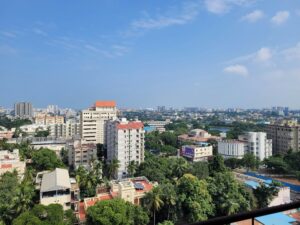
The contrast between these carefully planned sustainable cities and many organically developed urban centres, especially in India, is striking. Traffic congestion, uncontrolled sprawl, shrinking green spaces, inefficient energy use, deteriorating air quality, and unequal access to public services have produced increasingly polluted and vulnerable urban environments in the country. These challenges are especially visible in Delhi, Mumbai, Bengaluru, Chennai, and Pune where urban sustainability is challenged. Yet the experience of leading sustainable cities demonstrates that another path remains possible.
For India’s organically developed cities, however, the solution is not wholesale demolition and reconstruction. Such an approach would be prohibitively expensive, impractical, and socially disruptive. Most Indian cities have evolved gradually through dense neighbourhoods, narrow streets, and limited space. A more realistic strategy is incremental improvement, drawing on the work of scholars such as Jan Gehl, Timothy Beatley, and David Satterthwaite: footpaths can be widened where feasible, vacant land converted into pocket parks, rooftops equipped with solar panels and rainwater-harvesting systems. Similarly, older buildings can be retrofitted for greater energy efficiency, and rivers, lakes, and wetlands can be restored. It can be followed by better waste management, improved drainage, mixed-use neighbourhoods, expanded urban tree cover, for nature-based solutions, and the upgrading of informal settlements with good quality water, reliable sanitation, and unrestrained electricity. This policy can substantially improve urban liveability without displacing communities. Across much of the developing world, gradual renewal rather than rebuilding from scratch offers the most practical route towards healthier, safer, more inclusive, and resilient cities.
As climate change intensifies extreme heat, flooding, water scarcity, and air pollution across India, the quality of urban planning will increasingly determine not only economic prosperity but also public health and resilience. Delhi’s hazardous air pollution, Chennai’s recurring water crises, Bengaluru’s flooding, Mumbai’s vulnerability to extreme rainfall, and Pune’s rapid expansion illustrate the diversity of these challenges. India’s urban future will therefore depend as much on sound governance as on engineering excellence. The experience of leading sustainable cities demonstrates that long-term planning, transparent institutions, efficient public services, integrated land-use and transport planning, and meaningful citizen participation are indispensable for balancing economic growth with environmental protection and social inclusion.
Building Sustainable Indian Cities for Future Generations
Urban development must therefore serve not only today’s population but also future generations. Recent World Bank publications on India’s urbanisation argue that future growth depends upon resilient infrastructure, inclusion, environmental sustainability, and improved governance. Sustainability is therefore neither a fashionable policy agenda nor an aspiration reserved for wealthy societies. For India, it is an essential framework for ensuring that rapid urbanisation does not come at the expense of environmental security, social equity, or economic resilience.
The country’s most successful cities will not necessarily be those with the tallest skylines or the fastest growth rates, but those that invest in clean air, reliable public transport, resilient infrastructure, affordable housing, efficient resource management, and inclusive public spaces.
 Naveed Qazi is a prolific author and serves as Editor at Large for Science Matters India. Hailing from Srinagar, Kashmir, with a postgraduate degree in International Business from the University of Hertfordshire, United Kingdom, he writes on science, technology, business, global affairs, and has contributed to all leading English-language newspapers in Kashmir. His professional experience spans hospital marketing, banking, construction operations and IT content development across India and the United Arab Emirates.