By Saijal Bansal
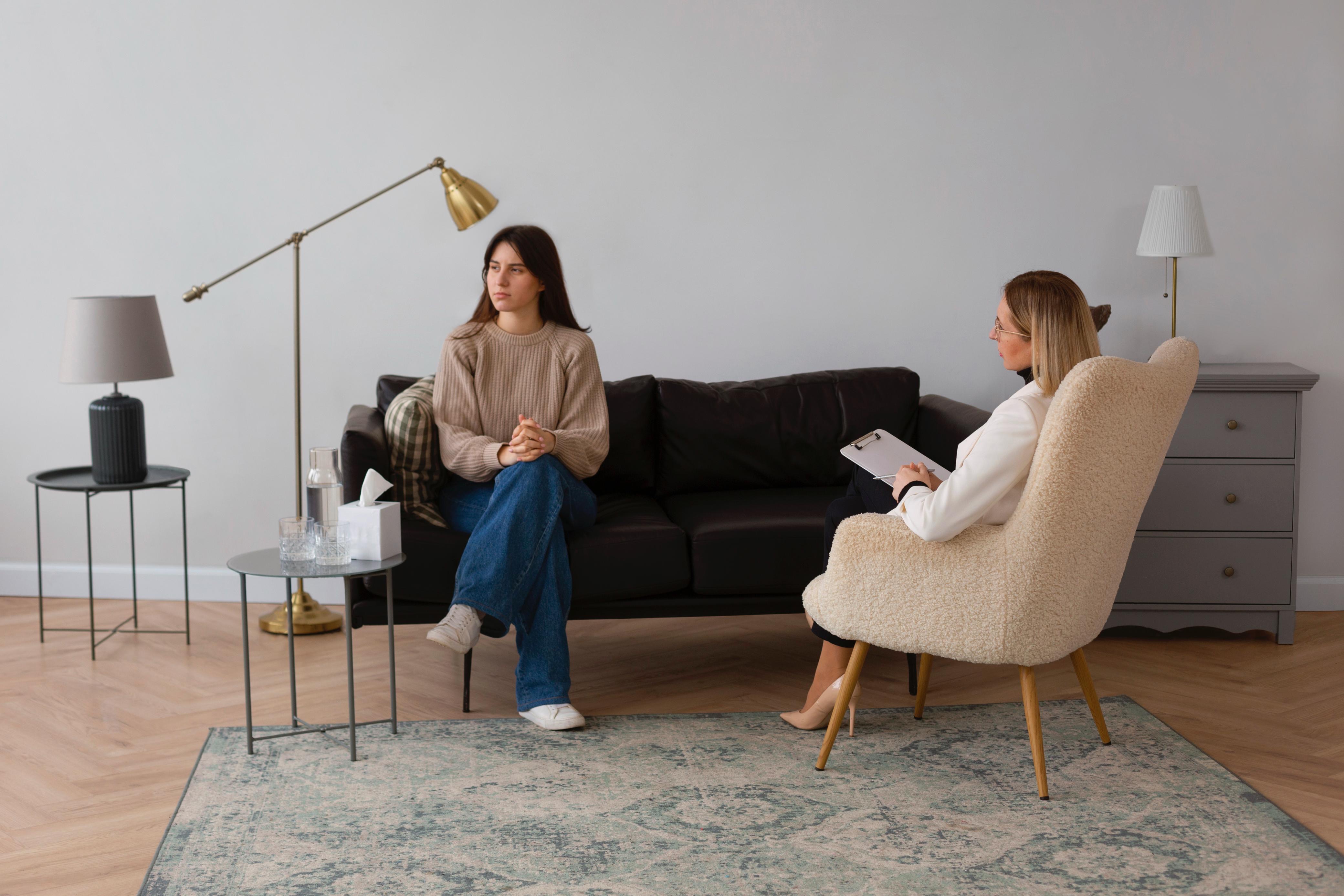
“Why does it always feel like I’m the one giving more, feeling more, needing more?” she asked me, but the question wasn’t really for me. It was for every person who had taken a piece of her and not noticed she was shrinking.
She loved with an intensity that could build worlds, and she feared with a terror that they would all burn down. Each unmet need, each unheard plea, was another confirmation of her deepest fear: that she was too much, and yet, never enough. So she built walls. Not to keep people out, but to hold herself in. An exhausting cycle. Hope. Disappointment. Retreat. It kept repeating.
Let’s be honest. Her story is not new to you. If you are a woman, you have lived a chapter of it. You are the woman who shows up strong, who keeps the peace, who carries the hidden burden while a scream is building in your throat. This is the unspoken epidemic: not the breakdowns that make headlines, but millions of unseen battles fought and lost behind a mask of ‘I’m fine.’
And it isn’t just a feeling, it’s a fact. The World Health Organization’s latest report in September 2025 backs it up: women account for 53% of global mental health cases. That’s more than half. It’s a number that doesn’t just represent data; it represents us. It represents the quiet battles, the silent meltdowns, the fear that wraps around you when you feel like you’re losing control. The WHO is even warning of rising suicides and an annual economic loss of $1 trillion if we don’t act. This isn’t a drill. The quiet suffering of women has become a global emergency.
 The Crushing Weight of Expectation
So yes, we are losing our women. Not to war or famine, but to the relentless pressure of a world that demands everything from them and refuses to see them when they are breaking. And the real tragedy? It’s all happening in plain sight, and we are letting it.
Why is this happening? Because women are being asked to carry too much. It’s that simple.
There’s the job, where she has to be twice as good to get half the credit. Then there’s the home, which is expected to run perfectly, and the responsibility for that falls on her. She’s the keeper of the schedules and the rememberer of the birthdays. She is the default parent and the designated worrier.
She is supposed to be a supportive partner, a present mother, a loyal friend, and a dutiful daughter. And through all of this, she has to stay fit, look put-together, and never show the cracks.
What people don’t realise is that every time her work goes unnoticed, every time she’s judged for a choice, every time someone asks for just one more thing, it adds up. It’s not abstract. It’s a real weight. It’s the tension in her jaw, the tightness in her chest, the exhaustion of a mind that won’t shut off. And then she opens her phone. It’s not a relief. It’s a highlight reel of everyone else’s success, making her own silent struggle feel like a personal failure. It makes her feel guilty for being tired, for not being happier, for not being more grateful.
But the part that truly breaks a woman is the invisible work. The constant emotional heavy lifting. The swallowing of her own needs, day after day, to make space for everyone else’s. The forcing of a smile when she wants to scream. The endless giving from a well that is running dry.
This isn’t about one bad day. It’s about the slow burn of a thousand tiny demands. It’s the quiet realisation that she’s so busy making sure everyone else is okay that she’s forgotten how to be okay herself. It leaves behind a deep, aching tiredness and a constant hum of anxiety. It’s the crushing weight of a world that takes and takes, and rarely gives a woman a moment to just be.
 It’s an Everyone Issue
When a woman starts to break, the damage doesn’t just stop with her. It spills over. Her kids learn to silence their own needs because they watched their moms do it. Workplaces lose talent and creativity because women are burning out and just leaving. Relationships strain under the weight of an emotional job that was never meant to be carried alone. Slowly, a society built on the backs of women running on empty starts to crack. This isn’t just a women’s issue, it’s everyone’s.
The answer isn’t for women to just get stronger. They already are. The answer is for the world to change. At home, that hidden burden has to be shared. The job of being the “default parent,” the one who remembers everything, the one who worries—that cannot fall on just one person. At work, we need real support and flexibility, not just a few nice words about “wellness.” A woman shouldn’t have to shatter to prove her worth. In society, we have to stop praising self-sacrifice and start valuing well-being. And as individuals, women must be allowed to ask for help without shame, to rest without guilt, to simply be human.
Because the truth is, women aren’t asking for the impossible. They’re not asking to be saved from hard work. They are asking for something so simple: to be seen, to be supported, to be allowed to be human. If we keep taking everything and giving nothing back, we won’t just lose women. We’ll lose the very heart of our families, our workplaces, our communities. It’s time we finally understood: a woman doesn’t need to carry the world alone. The world must learn to carry her, too.
 Saijal Bansal is the visionary founder of Apricity Haven, a mental health consultancy transforming the way we approach emotional well-being. A certified clinical hypnotherapist with a Master’s in Psychology from the University of Nottingham (UK), she blends science, empathy, and subconscious insights to unlock profound, lasting healing. Saijal empowers individuals, professionals, and communities to cultivate resilience, embrace clarity, and thrive with unwavering confidence.
Very well written article. Such articles are the need of today’s times where women are under multiple pressures. Keep on writing and rising
and spreading awareness
Very well said , very well written, very well xplained….
Very Relatable
Proud of you. Your article is an eye opener to understand the real emotions of a female.
Saijal you have penned down beautifully the status of women in today’s life. Working women are the worst sufferers. Trying to balance between work and family, they burn themselves. Hoping your article awakens families to give it more to women.
God bless you.