By Chandrani Sinha, Ghanshyam khadka, Tara Chapagain
Kashmir to the neighbouring country of Nepal, the Himalayas are showing signs of collapse. Each landslide and flood serves as a warning, a fracture line that is widening across the world’s youngest mountain range.
The question looms after each disaster: How many more cracks will it take until we stop building on fragile ground?
On August 27, 2025, thousands of pilgrims were making their way to the sacred Vaishno Devi shrine, when part of the hillside near Ardhkuwari gave way. Mud, boulders, and fallen trees cascaded down on the pilgrims’ path, covering large sections of the route. By the time rescue teams arrived, more than thirty people had lost their lives, and many others were injured.
The pilgrimage was halted, but that decision came too late for those trapped beneath the landslide. Officials attributed the disaster to a cloudburst and ongoing monsoon rain. Helicopters and rescue teams faced difficulties as the weather remained unforgiving. Families of the victims were promised compensation, but for those waiting outside hospitals in Reasi, no announcement could truly convey the depth of their loss.
The Vaishno Devi disaster was just the latest in a series of tragedies in the Himalayas this monsoon. Just weeks before, a flash flood in Kishtwar during the Machail Mata pilgrimage had claimed over sixty lives, with hundreds still unaccounted for. In Dharali, Uttarakhand, rising rivers destroyed apple orchards and homestays. Across the border in Mustang, Nepal, a mudslide wiped out livestock, homes, and ancient trails.
Each area shares the same narrative: mountains buckling under the pressure of severe weather and unchecked human activity.
Locals in Katra point to hotels and guesthouses that cling to the slopes. They believe the delicate ridges have been overburdened by uncontrolled construction and constant tourist traffic. Scientists agree that cloudbursts and heavy rainfall are becoming more common. When slopes are already cut up for buildings and roads, the risks increase.
The Vaishno Devi landslide was not an isolated tragedy. The summer of 2025 has left scars across the Himalayas. From the Pir Panjal in Jammu to the tea slopes of Darjeeling, the mountains have been cracking, sliding, and flooding. Each collapse sets off echoes of the others, like aftershocks in a series of warnings.
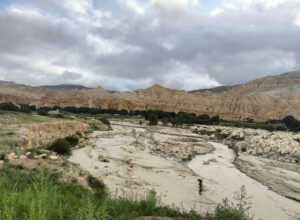
Himachal Pradesh: The Hills That Slide
Farther south, Himachal Pradesh saw its deadliest monsoon in decades. In Shimla, half a hillside collapsed, carrying with it homes, shops, and a century-old temple.
“Hotels have been built where rivers once ran,” said Ramesh Thakur, an apple farmer from Kullu, watching floodwaters destroy his orchard.
Between July and August 2025 alone, over 300 lives were lost in Himachal’s floods and landslides. Roads to tourist towns like Manali and Dharamshala remained cut off for weeks. Climate scientists note rainfall patterns have shifted—sudden, high-intensity bursts now overwhelm fragile slopes. Yet construction continues: hilltops are carved into parking lots, riverbeds filled with concrete foundations.
Uttarakhand: A Town on the Brink
In Uttarakhand, the scars are older but just as raw. Joshimath, the gateway to pilgrim routes and border outposts, has lived under cracks since early 2023. This August, torrential rains deepened fissures, forcing hundreds into relief camps again.
“The mountain is alive, but they treat it like dead stone,” said Anita Rawat, a local schoolteacher whose house split down the middle.
Along the Char Dham highway, boulders crashed onto widened roads carved for mass pilgrimages. Scientists repeatedly warned against blasting fragile ridges, but the project marched on. By mid-August, at least 150 people had died in Uttarakhand’s floods and landslides, while the Yamuna and Alaknanda rivers surged beyond embankments.
Darjeeling & Sikkim: Rivers That Roar
On the eastern flank, the Teesta River in Sikkim turned monstrous again. This August, swollen by cloudbursts, it tore through bridges and settlements already weakened by last year’s glacial lake outburst flood.
“Our river is no longer ours. Human greed has turned them into a monster now,” said Tashi Sherpa, a small tea shop owner whose house near Rangpo was swept away.
In Darjeeling, the mushrooming illegal Highrises are a matter of concern for the tourists and locals as they are scared their fate might also get linked.
Nepal: Mustang’s Black Night
On Asar 24 (July 8), a sudden mudflow mixed with water, rocks, and debris struck Chumjungkhola in Lomanthang Rural Municipality-4, Upper Mustang. As the temperature rose sharply and rainfall occurred over the snow, the snow began to melt. The melting water, combined with rainfall and additional melt triggered by the heat, caused the glacier on the steep slope of Chhuama Peak to surge abnormally.
As a result, moraines collapsed as landslides into the gorge, creating blockages that eventually burst, releasing a snow-mixed debris flood downstream.
On July 8, Nepal experienced two consecutive glacier-related disasters. On the same day that the Chumjung flood occurred, a similar but much larger and more destructive flood struck Bhotekoshi.
According to Dr. Arun Bhakta Shrestha, a climate and environmental risk expert at the International Centre for Integrated Mountain Development (ICIMOD), “Because the Bhotekoshi flood drew most of the attention, the Mustang flood has been overshadowed. Judging by its nature, the Mustang flood may have been triggered either by a glacier surge or supraglacial flow. This is because a glacier is not just solid ice. When internal water carves its way through, steep sections can detach, collapse, and rush down as a flood.”
Due to climate change, rainfall has increased in Mustang, a region once known for its extreme aridity (rain-shadow). When heavy downpours now last for two to three consecutive days, the rainwater flows over the surface instead of soaking into the ground, triggering floods and landslides. As the floods carry down moraines and debris from higher altitudes and deposit them downstream, the water level of the Kali Gandaki River rises, submerging settlements along its banks.
By nature, Mustang’s geography was shaped to receive heavy snow but very little rain. Geographically, Mustang’s capacity to absorb rainfall is not comparable to Pokhara’s.
In Pokhara, 25–30 mm of rainfall per hour is normal, but in Mustang, even 25 mm of rainfall per hour can cause unimaginable damage. Therefore, the increase in rainfall in Mustang is a dangerous warning, says climate expert Prabin Man Singh, Director of the Nature Research Center.
According to Singh, “The settlements in Mustang are ]unique, with traditional mud-roofed houses. As heavy rains intensify, these houses begin to leak, and the sandy,fragile terrain of Mustang increasingly turns rainfall into floods.”
The main cause of the flood in Kagbeni, Mustang, on 14 August 2023 was unusually heavy rainfall for Mustang’s geography. In the arid, sandy rain-shadow terrain of Muktinath in Mustang, rainfall of just 15 mm per hour triggered landslides, which blocked streams. When these blockages eventually burst, they unleashed destructive floods.
According to a report prepared by Bahragaun Muktikchhetra Rural Municipality, the flood buried or destroyed 29 hotels, 13 houses, 2 branch offices of commercial banks, one ward office, a local police post, a school, a temple with a rest house, one motor bridge, 9 sheds, and 32 cattle including cows, horses, and mules. It also swept away 16 motorcycles, 2 jeeps, a funeral site, a suspension bridge, and an excavator.
As per the latest data provided by the Pokhara Office of Hydrology and Meteorology, rainfall in Upper Mustang has increased significantly in recent years.
Records from the meteorological station at Chhoser, Lomanthang Rural Municipality–1, show that until 2009, the maximum rainfall in Upper Mustang was below 200 mm.
However, by 2023, the recorded maximum had risen to 331 mm.
Similarly, records from the aero-synoptic station in Jomsom indicate that until 2010 the maximum rainfall there was below 300 mm, but by 2023 it had increased to 665 mm annually. Furthermore, data from the Department of Hydrology and Meteorology show that Nepal’s average annual maximum temperature has been rising by 0.056°C per year.
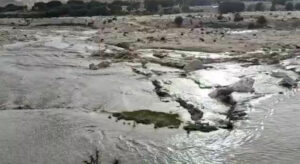
The Science Behind the Chaos
Jayanarayanan Kuttippurath, Professor at IIT and a climate change scientist said, “As the ocean temperature is increasing due to global warming and climate change, which is faster in the Indian Ocean, more water vapour in this region to facilitate more rains. A warm atmosphere holds more moisture and the Himalayan region is warming faster (compared to) the rest of India and the global average.”
Warming is shifting jet streams and prolonging the western disturbance activity into the monsoon season, intensifying cloudburst events.
Most cloud bursts happen in monsoon seasons, as there is a lot of moisture for cloud formation and rainfall, and the Himalayan slopes fuel the rapid updrafts of this moist air for rapid condensation of water vapour into dense clouds to facilitate cloudbursts.
In addition, there is also the west-ward movement of monsoon systems, which are driven by atmospheric circulation. Recent studies show that the change in speed and position of these systems due to the changes in Hadley circulation driven by the changes in cross-equatorial winds and trade winds over the Pacific.
Experts across the Himalayan arc agree: the crisis is both natural and man-made. A 2025 study shows Himalayan rainfall intensity has increased by 25 percent over three decades.
But instead of preparing, governments have accelerated “development.” Hydropower dams tunnel through fragile rock, as roads are carved into mountainsides with little thought for slope stability.
A Chain of Loss
Taken together, the last three months alone, from June to August of 2025, have left more than 1,200 people dead from Kashmir to Nepal. Kashmir’s shrine tragedy, Himachal’s hillside collapses, Uttarakhand’s fissures, Darjeeling’s landslides, Sikkim’s floods, and Mustang’s devastation are not isolated accidents. They form a single story: the Himalayan spine is breaking under the weight of greed and neglect.
Global Echoes
This story is not confined to South Asia. In July 2025, a glacial lake burst in Switzerland swept away villages; while in May, Brazil’s hillside favelas collapsed under record rain; and in June, Italy’s Dolomites witnessed a deadly landslide. The Himalayan crisis mirrors a planetary one.
“The Himalaya is not a regional issue,” warned Dr. Ramesh Singh, a geologist. “It is the frontline of the global climate emergency.”
The Closing Warning
Back in Kashmir, families of the Vaishno Devi victims light candles outside makeshift relief camps.
In Mustang, survivors rebuild with mud and stone, even as rains threaten again.
Across Himachal and Sikkim, people wait for roads to reopen, their futures tied to slopes that could collapse any monsoon night.
From Kashmir to Mustang, the mountains are speaking. They speak in cracks, in rivers that roar like monsters, in nights remembered as black. The question is – will governments, builders, and societies listen, or will silence bury more towns, more shrines, more lives?
This story was produced in collaboration with UNESCO and Youth Innovation Lab.