

Fungi-based biocomposites can not only replace conventional plastic foam packaging but also surpass their mechanical performance while remaining completely biodegradable, scientists from the Indian Institute of Technology Madras have shown.
The Plastic Packaging Problem
Traditional packaging materials, such as Expanded Polystyrene (EPS) and Expanded Polyethylene (EPE), have long dominated the industry due to their lightweight properties and shock-absorbing capabilities. However, these petroleum-derived foams present significant environmental challenges. With only 9% of plastic waste being recycled globally and 79% ending up in landfills, the environmental impact has become increasingly severe.
The research team, led by Dr. Lakshminath Kundanati, noted that India alone generates over 4 million tons of plastic waste annually, with foam-based packaging materials contributing substantially to this burden. These materials persist in the environment for centuries, fragment into harmful microplastics, and release toxic substances that threaten both terrestrial and aquatic ecosystems.
Nature’s Solution: Mycelium-Based Composites
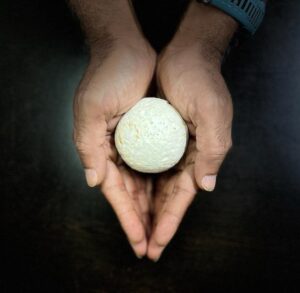
The researchers turned to fungi, nature’s master decomposers, to create sustainable packaging alternatives. Mycelium, the root-like network of fungi, possesses remarkable properties that make it ideal for material development. As fungi grow, they secrete enzymes that break down organic substrates while simultaneously creating strong, adhesive networks that bind materials together.
“Fungi have unique features like rapid growth, adhesiveness, biodegradability, and versatile substrate compatibility that make them ideal for decomposing complex organic compounds,” the researchers explained. This natural binding process creates a composite material that requires no synthetic adhesives or harmful chemicals.
Innovative Research Methodology
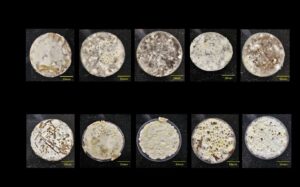
The study compared two promising fungal species, Ganoderma lucidum and Pleurotus ostreatus, grown on five different agricultural waste substrates: sawdust, cardboard, paper, coconut coir (cocopith), and hay. This approach addresses two environmental challenges simultaneously: reducing plastic waste and repurposing agricultural residues that would otherwise be discarded.
The cultivation process involved mixing fungal inoculum with sterilized substrates in a 1:1 ratio, followed by two weeks of controlled incubation at 25-30°C. The resulting biocomposites were then subjected to comprehensive testing to evaluate their mechanical strength, water resistance, and biodegradation properties.
Remarkable Performance Results
The study’s most striking finding was that certain mycelium composites significantly outperformed conventional plastic foams in compression strength. Ganoderma lucidum grown on cardboard achieved a remarkable compressive strength of 2.72 MPa, nearly ten times stronger than EPS (0.281 MPa) and almost forty times stronger than EPE (0.069 MPa).
Several substrate-fungus combinations showed exceptional promise:
- Cardboard with Ganoderma lucidum: 2.72 MPa
- Coconut coir with Ganoderma lucidum: 1.79 MPa
- Sawdust with Pleurotus ostreatus: 1.79 MPa
Advanced microscopy revealed that the superior performance correlated with hyphal density and structure. The researchers observed that Ganoderma lucidum produced thicker hyphae (3.01-4.0 μm diameter) compared to Pleurotus ostreatus (1.5-1.9 μm), contributing to enhanced structural integrity.
Water Resistance and Practical Applications
Beyond mechanical strength, the biocomposites demonstrated impressive water resistance properties. Surface water contact angle measurements showed that several materials achieved hydrophobic characteristics, with sawdust-based Pleurotus composites reaching contact angles of 121.98°, exceeding the hydrophobicity of traditional EPS materials.
This water resistance makes the biocomposites suitable for practical packaging applications where moisture protection is essential. The denser mycelium growth created smoother surfaces with fewer pores, contributing to better water repellency, a critical factor for packaging materials.
Environmental Benefits: Complete Biodegradation
Perhaps most importantly for environmental sustainability, the biocomposites demonstrated complete biodegradability. Burial tests in potting soil showed that samples began decomposing within two weeks, with some materials losing up to 80% of their weight within six weeks. This stands in stark contrast to conventional plastic foams, which persist in the environment for centuries.
The biodegradation process was influenced by substrate composition, with lignocellulosic materials like sawdust and hay showing different degradation rates based on their cellulose, hemicellulose, and lignin content. This variability allows for customization of biodegradation timelines based on specific application requirements.
Addressing Global Waste Challenges
The implications of this research extend far beyond laboratory findings. India generates approximately 350 million tons of agricultural waste annually, presenting an enormous opportunity for circular economy implementation. By converting agricultural residues into high-performance packaging materials, this technology addresses multiple environmental challenges simultaneously.
The researchers emphasized that mycelium-based composites align perfectly with circular economy principles, transforming the traditional “take-make-consume-throw away” model into a regenerative system where waste becomes the foundation for new materials.
Future Prospects and Applications
While the current results are promising, the research team identified opportunities for further optimization. Different substrate compositions could be fine-tuned to match the specific elastic properties of various conventional packaging materials. Additionally, sustainable hydrophobic coatings such as beeswax or plant-based waxes could extend shelf life for longer-term applications.
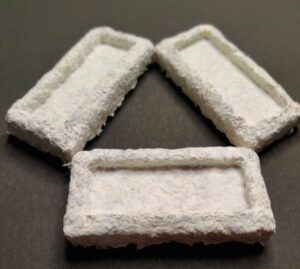
The technology shows particular promise for secondary packaging applications where strength, water resistance, and environmental compatibility are paramount. Industries ranging from electronics to food packaging could benefit from these sustainable alternatives.
A Sustainable Future
This groundbreaking research demonstrates that nature-based solutions can not only replace harmful synthetic materials but also exceed their performance characteristics. As global pressure mounts to address plastic pollution and climate change, innovations like mycelium-based biocomposites offer tangible pathways toward a more sustainable future.
The study represents a significant step forward in biomaterials science, proving that fungi, often overlooked organisms, hold tremendous potential for solving some of humanity’s most pressing environmental challenges. As this technology advances toward commercial applications, it could fundamentally transform how we approach packaging design and waste management.
By harnessing the remarkable properties of fungi and agricultural waste, researchers have created a compelling alternative that protects products while protecting the planet, a true win-win solution for the packaging industry and environmental sustainability.