By Nighat Hafiz
“Haskell thinks like a biologist, writes like a poet, and gives the natural world the kind of open-minded attention one expects from a Zen monk rather than a hypothesis-driven scientist.” James Gorman
Tennessee is a state in the southeastern United States known for its lush green forests and the breathtaking Smoky Mountains. Geographically diverse, its forests cover 13.8 million acres, representing 53% of the state’s land area, with diverse types of trees found in its Blue Ridge Mountains. The forest mandala is a circle of the same size as the mandala, a spiritual diagram used by monks of Tibet, but originated in ancient India as a method of meditation.
In a way, mandala symbolizes the universe in its wholeness and mystic journey, and teams well with the nature of the ever-changing forest and human existence. The piece of forest mandala under observation rests comfortably on a slope where the author of the book sits on a flat slab of sandstone and tries to observe if the whole forest can be seen through a small contemplative window of leaves, rocks, and water. David George Haskel makes it possible with passion, persistence, and insightfulness.
“My own wintertime desiccation has created a thirst for wet, green renewal that moves me to a closer look. I lie at the mandala’s edge and lean my face to mosses. They smell of earth and life, and their beauty rises exponentially with nearness. I am greedy for more and pull out a hand lens, pressing my eye against it as I creep closer.”
Haskel is a British- American writer, a biologist, well acclaimed, and praised all over the world for his love for nature. He received his B.A.in Zoology from the University of Oxford, and his Ph.D. in evolutionary biology from Cornell University. He carries a two-time Pulitzer Prize finalist in general nonfiction, is Wilson Writing Award finalist, and winner of the 2013 Best Book Award from The National Academies, besides a few more awards and honors. He has authored four books: The Songs of Trees,’ Sounds Wild and Broken’, ‘Thirteen Ways to Smell a Tree’, and the most notable book, The Forest Unseen. The author has worked in prestigious positions and is praised generously for his unmatched writing efficiency in science, literature, and religion.
‘The Forest Unseen’ is a new genre of nature writing. It is a fine cocktail of poetry and scientific research, one man’s unparalleled love for nature, its resources, and the feeling for conservation of eco-assets. A non-fiction book, The Forest Unseen is about a year’s watch in Nature by visiting a square-meter patch daily around the year in a Tennessee forest. Haskell, calling it his forest of mandala, tries to watch its calmness and serenity, smell its fragrances. He listens to and feels for tiny changes that take place in the blooming and decomposing of trees and plants. There are numberless enchanting stories of biological, evolutionary, and ecological in the book that keep the reader engaged in the author’s classic adventure.
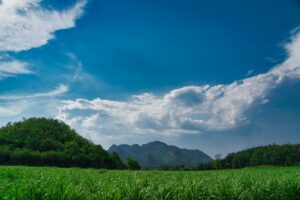 In all forty-three short chapters, David George Haskell tries to cover the seasons of the year with simple observation and spins a marvelous tapestry using poetic expression, binding together the tiniest microbes and the largest mammals. His writing is fresh as the first blossoms of spring flowers dancing in the zephyr. He is often lost in the sound of birds, the rustling of the wind and the tiny rebirth of plants. The beauty of his expression is spread over the year, with an account of month-to-month description of changing weather, seasonal decay and renewal of forest resources. As a scientist, he is not bothered about framing a hypothesis for experimentation; the conclusions he draws from keen observation prove more valid and highly reliable than laboratory- grown research.
With a highly activated sensitivity threshold, Haskell takes science, makes it poetry, and keeps on offering a superb cocktail of both to his readers. His power of inspection is thoroughly impressive in describing details about the ecosphere. Working in January chill, with enthusiasm, he writes:
“Unlike the chemical reactions that sustain humans, plant biochemistry can run at many different temperatures, and it does not fail when cooled. But when cooling turns to freezing, problems start. Expanding ice crystals will puncture, tear, and destroy the delicate inner architecture of cells. Plants in winter must swallow tens and thousands of blades, keeping each away from their fragile hearts.”
The book surprises on many accounts, interestingly, when Haskell discusses some beliefs and anecdotes held in the past by healers and quacks who established a link between the shape, color, and growth of plants in healing different disorders. Amazingly, the bloodroot would be used to heal blood disorders; scented blossoms of the apple tree for fertility deficits and complexion; red peppery plant would be associated with the sign of blood and anger; hepatica’s three-lobed purple leaves for liver ailments.
Haskell’s book’ The Forest Unseen is a wholly original book in content and research. It is a delightful journey into the wilderness. If you are looking for poetic tranquility in the biological world, the book will prove a remarkable companion to relish and understand both.
 Nighat Hafiz is a columnist, writer, and a retired professor of Psychology. She describes herself as someone who is highly concerned about Kashmir, her native land; its biosphere, its people, and their socio-cultural sustainability. It reflects subtly in her writings, may it be the columns she writes for different newspapers, books she plans, or the quotes she conceives and designs. Her first book, “Kashmir to Karachi,” is written in mesmerizing prose and is an authentic addition to the life writings of Kashmir.
Feedback: m.nighathafizullah@hotmail.com