A new brain-computer interface device enables quicker and more natural conversations.
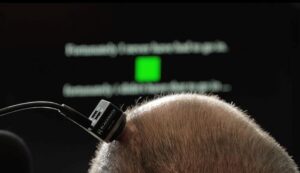
A groundbreaking innovation is transforming communication for individuals with neurological conditions. In a study published in Nature, researchers at the University of California, Davis, unveiled a cutting-edge brain-computer interface (BCI) that translates brain activity into speech in real time, creating a digital vocal tract for people who have lost the ability to speak.
The system enabled a participant with ALS (amyotrophic lateral sclerosis) to communicate through a computer, adjusting intonation and even singing simple melodies. Unlike traditional text-based speech interfaces, which resemble messaging, this real-time synthesis mirrors natural conversation, akin to a voice call.
“With instantaneous voice synthesis, neuroprosthesis users can engage more naturally in discussions. They can interrupt when needed, and others will be less likely to cut them off accidentally,” explained Sergey Stavisky, senior author of the study and co-director of the UC Davis Neuroprosthetics Lab.
This breakthrough marks a significant leap toward restoring lost voices, granting individuals greater autonomy and a deeper connection in their interactions.
Decoding Brain Signals to Restore Speech
At the heart of this innovation is a system of four microelectrode arrays, surgically implanted into the brain’s speech centre. These tiny devices capture AI neural activity and transmit it to computers that translate thought into voice, bridging the gap between intention and expression.
“Maitreyee Wairagkar, the first author of the study, explained that the biggest challenge in real-time voice synthesis involved identifying exactly when and how a person with speech loss was attempting to speak.
Instantaneous, Expressive Speech—A Game-Changer
The technology enabled a participant with ALS to speak through a speaker with an ultra-fast delay of just one-fortieth of a second, matching the timing of natural speech.
Unlike conventional systems that rely on preset words, this interface allows new words, interjections, and tonal adjustments. The participant could even modulate his voice to emphasise words or ask questions, creating a more natural interaction. Impressively, he also took steps toward varying pitch by singing simple melodies—a major milestone in voice reconstruction technology.
AI-Powered Algorithms Make It Possible
Behind the breakthrough are advanced AI-driven algorithms trained to match neural firing patterns to speech sounds. As a result of analyzing brain activity during speech attempts, researchers refined the system to reconstruct his voice purely from thought.
Hope for the Future
“Our voice is part of what makes us who we are. Losing the ability to speak is devastating,” said David Brandman, co-director of the UC Davis Neuroprosthetics Lab and the neurosurgeon behind the participant’s implant.
“This research gives hope to people longing to communicate. We showed how a paralysed man regained speech, empowered to express himself in his synthesised voice.”
Challenges and Next Steps
Despite the promising results, the technology remains in early-stage research. So far, researchers have tested the system on only one ALS patient, and they emphasise the urgent need for broader trials, especially for individuals who have lost speech due to strokes.
Still, the potential is undeniable: brain-to-voice neuroprostheses could redefine communication, breaking barriers for those silenced by neurological disorders.
Caution: Investigational devices are limited by US federal law to investigational use.
Therefore, this breakthrough in AI neural interfaces offers new hope for those who have lost their ability to speak. By translating brain activity into real-time, expressive speech, this innovation redefines communication, granting individuals autonomy and natural interaction.
While more research is needed, the progress so far points to a future where lost voices are restored, helping people reconnect with the world personally.