By Shakoor Rather
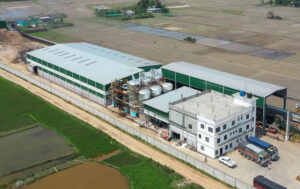
In the lush agricultural landscapes of Lanka, Assam, a quiet revolution in sugarcane processing has been unfolding. For the past four years, what developers call the “world’s first boilerless sugarcane processing plant” has been operating. It has proven both technological viability and commercial feasibility. The innovation could transform how the global sugarcane industry addresses its environmental impact while improving productivity, experts say.
Zero-Emission Processing Becomes Reality
Traditional sugarcane processing depends on burning bagasse—the fibrous residue left after juice extraction—in large boilers. This practice contributes heavily to air pollution and carbon emissions. However, a facility located less than 200 km from Guwahati is showing that alternative methods are not only possible but may be even more effective.
“Unlike conventional sugar processing units that burn bagasse, our Low-Temperature Evaporation (LTE) system works without a boiler. This makes the plant completely fuel-free and zero carbon,” explained Vivek Verma, Managing Director and Founder of Spray Engineering Devices Limited (SEDL), the pioneer of this technology.
“It also eliminates water discharge by recycling all recovered water for irrigation on nearby organic sugarcane farms,” Verma said.
The technology utilizes Mechanical Vapor Recompression (MVR) based LTE, enabling processing without traditional combustion systems. This approach has allowed the facility to save nearly 60,000 tonnes of bagasse while processing over 180,000 tonnes of cane annually, the company says.
Environmental and Economic Benefits
The environmental benefits extend well beyond emissions reduction. According to recent research published in the Journal of Cleaner Production, traditional sugarcane processing contributes significantly to particulate matter pollution, especially in rural areas where regulatory oversight may be limited.
A review of 24 studies, published in the journal Environmental Health Perspectives, found a well-documented link between air pollution from sugarcane burning and adverse health effects in workers and neighboring communities with respiratory, renal, and cardiovascular health effects.
The boilerless approach, experts say, addresses multiple sustainability challenges simultaneously:
- Zero carbon emissions from processing
- Complete elimination of water discharge
- Conservation of biomass resources
- Improved product quality through lower processing temperatures
“The technology delivers superior quality while setting new benchmarks in environmental responsibility,” Verma notes, highlighting how the system represents a fundamentally different approach to agro-processing.
Broader Implications for the Global Boilerless Sugarcane Industry
With India being the world’s largest sugarcane producer, innovations in processing technology have significant global implications. The sugarcane industry worldwide faces increasing pressure to reduce its environmental footprint while maintaining economic viability.
“Boiler-less sugarcane processing offers significant environmental and operational benefits by eliminating combustion systems, achieving zero emissions, recycling recovered water for irrigation, integrating solar power, and conserving bagasse,” says Dr. Sawinder Kaur, Associate Dean, Department of Food Technology and Nutrition, School of Agriculture, Lovely Professional University (LPU) in Punjab.
“By eliminating boilers, sugarcane plants can improve jaggery yield and quality, reduce boiler maintenance and fuel costs, and achieve full energy independence without combustion inefficiencies,” Kaur told Science Matters.
SEDL says the potential for boilerless technology extends beyond environmental benefits. The approach envisions an integrated system that could convert:
- 100% of sugarcane sugars into refined products and ethanol
- 100% of sugarcane cellulose (bagasse) into bioproducts
- 100% of non-sugar, non-cellulose biomass into value-added streams
Global Emissions from Sugarcane
Sugarcane production is responsible for over 400 million tonnes of CO₂ equivalent annually, a figure comparable to the total emissions of countries like Brazil, according to ClimateCane Tracker.
Approximately 77% of these emissions stem from the farming phase, which includes activities such as fertilizer application, irrigation, and pre-harvest burning.
Social Impact and Rural Development
The SEDL facility has created significant social and economic value beyond technological innovation. It supports a network of over 8,000 organic sugarcane farmers with technical training, fair pricing mechanisms, and transparent procurement processes.
Ram Prabesh Chahan from Hajagaphar village in Hojai District of Assam says,
“We’ve seen how smoke from traditional sugarcane units affects our health. This new boilerless technology promises cleaner air, which means fewer breathing problems for our families. If it also helps mills earn more and share the benefit, it could truly improve both our health and income.”
“Less smoke means less coughing, fewer hospital visits, and healthier children. That alone is a big relief. And if this clean technology helps mills make better products, we hope they will also give us better prices. It’s a win-win—for our health and our livelihoods,” Bechu Parit from Watizor No. 2 in West Karbi Anglong District added.
Economic Efficiency
Boilerless sugarcane processing significantly reduces operational costs over time compared to traditional methods. Traditional sugar mills use combustion-based boilers, which lead to high fuel and maintenance costs. Their energy efficiency ratios (power-to-heat) typically range from 0.04 to 0.07, according to a study in Biomass Conversion and Biorefinery.
In contrast, advanced systems—such as those in modernized or boiler-less plants—achieve energy efficiency ratios between 0.3 and 0.5. This reflects much better performance and lower energy consumption, the report noted.
Current Operations and Future Growth
The Assam plant is running at around 40% of its installed capacity, processing 200 tonnes of cane per day. This is due to limited sugarcane availability, according to Pradeep Jain, promoter of Eco Tech Agro Mills.
“We are pushing for increased sugarcane farming in the area, convincing growers to adapt to new varieties and techniques for better yield,” Jain explained. In a significant move to demonstrate the financial benefits to local farmers, his company has leased 700-800 bighas of land in neighboring areas.
“We are still in the early stages, but we are hopeful of achieving even better results in the coming years,” he added.
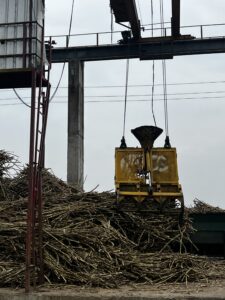
Jain also pointed out the untapped potential of bagasse—the dry residue left after extracting sugarcane juice—which can be used to produce paper pulp or serve as fuel.
“The bagasse produced at the Lanka plant is transported to another company facility, where it is used as fuel,” Jain said. This shows how the byproduct adds value within a circular economy model.
Future Outlook
Experts say boiler-less processing can help the sugarcane industry meet strict environmental rules. It may also open new revenue streams through biomass valorization.
India exported over 516,746 metric tonnes of jaggery worth ₹3,570.77 crores in 2023–24. Technologies that improve quality and lower environmental impact are likely to gain market share. This applies to both domestic and international markets, where consumers increasingly value sustainability.
With demonstrated operational success over four years, the technology has moved beyond experimental stages.
“Boiler-less sugarcane processing is a commercially viable and scalable solution to improve industry sustainability. Its success in Assam shows strong potential, especially for small-to-medium mills trying to revive closed sugar factories,” Kaur affirmed.